Through the years, several people have told me that their doctors said, “There are no options for hearing assistance for single sided deafness. You just have to live with it.” That is patently false information. There are several options. While not everyone with single sided deafness feels the need for an assistance device, for many people they are very helpful.
Hearing Aid Options
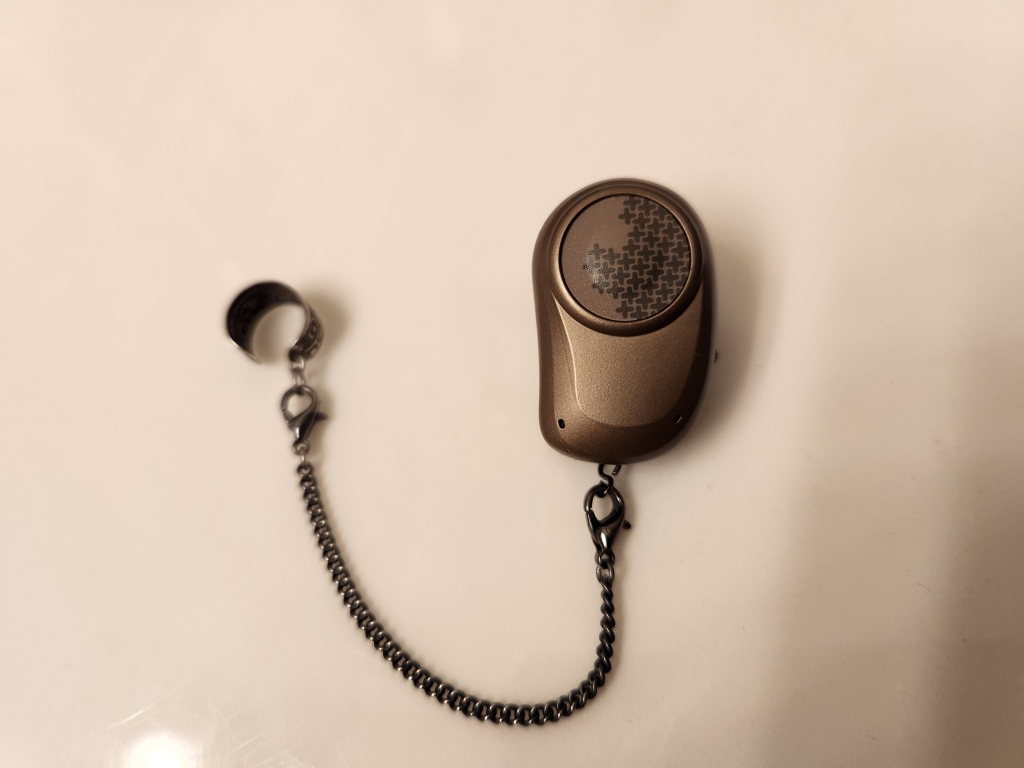
The hearing aid options for single sided deafness are typically a CROS or BiCROS hearing aid. A CROS hearing aid is for situations where your better hearing ear has normal hearing, a BiCROS provides amplification for the better ear as well as the deaf ear (so typically used when you have hearing loss in the better ear also). A CROS aid works by the deaf ear wearing a microphone that sends the sound to the hearing ear aid. The hearing ear processes all the sound.
Bone Conduction Device Options
Bone conduction works by sending sound through the skull via vibration. In some forms of single sided deaf this can be used to bypass middle ear issues to send sound to the cochlea. For Acoustic Neuroma warriors, typically, this method is used to send the sound from the deaf side over to the hearing side (many AN patients no longer have a working auditory nerve on the deaf side). Again, the hearing side would process all the sound in the above description. There are surgically implanted bone anchored devices as well as some options that are not surgical (such as a headband or stick on). Typically, it will be best for AN Warriors to do the implant as that is loudest, and you need the extra power to get from the deaf side to the hearing side.
Cochlear Implant
A cochlear implant is an option that will actually allow for the ability to locate sound and process sound on the deaf side. You wear a sound processor behind the ear and have an implant in your cochlea that sends electrical information to the brain through the auditory nerve. Unfortunately, most Acoustic Neuroma patients are not candidates for a cochlear implant because they have no functional hearing nerve after treatment. If you are one of the few who has a functional hearing nerve, a cochlear implant requires a surgery to install. There are some doctors who will do the implant at the time of tumor removal- but you need a very particular set of circumstances for this to be feasible. The cochlear implant does take some time for the brain to adjust to as it is receiving sound in a new manner.
Auditory Brainstem Implant
An auditory brainstem implant is typically used in situations such as neurofibromatosis type 2. It does not restore hearing but helps pick up some sounds such as traffic and other environmental cues. It helps some with word recognition but not to the level of the other options listed above. It is a surgery to install and include electrodes on the brainstem (past the hearing nerve so you don’t need a functional nerve), a decoding chip, and a microphone and sound processor behind the ear.

 The "Lucky" Brain Tumor
Leave a comment