
When I was diagnosed with my brain tumor, I had lost about 90% of my hearing on the tumor side. I had realized I could no longer talk on the phone on the affected side and that prompted me to see the doctor, which led to a hearing test, then an ENT appointment, an MRI, and ultimately a diagnosis of Acoustic Neuroma. For my treatment, the surgical approach my surgeon chose (translabyrinthine) always results in total deafness in that ear. I thought that losing the last 10% of my hearing wouldn’t be that jarring, but it was actually a pretty big change for me.
I found that I needed to learn new coping skills and rely on different technology after I became single sided deaf. Likely I may have wanted those things if I had stayed with the 90% hearing loss- but it was only months that my hearing loss was severe before I became deaf on that side. I did a lot of research into hearing device options, lip/ speech reading, environmental skills, and other technological assistance after my hearing loss. I was really lucky to have a close friend who had been single sided deaf from a young age who could counsel me and give me tips.
I received a lot of different assistance and care after hospital discharge for my Acoustic Neuroma surgery. I worked with vestibular therapists who helped me regain balance skills. I had oversight and follow up with my neurosurgeon, my ENT surgeon, my general practitioner. But there was no one in the medical arena who helped me transition to being hard of hearing. I did meet with an audiologist but all they seemed to do was hearing tests and hearing device information.
As I was volunteering for the Acoustic Neuroma Association I became aware that no one seems to get assistance with transitioning to being hard of hearing. It felt like something that should exist. So I went looking, and here is what I found…
There is something called Aural Rehabilitation or Auditory Rehabilitation that focuses on helping you learn life skills and tips to transition to being a hard of hearing individual. An audiologist cannot bill for it, a speech pathologist can bill for it, but it is not regularly offered to adults undergoing a change in hearing.
I found this wonderful professor who offers free Auditory Rehabilitation (both online and virtual) to give her grad students opportunities to practice. I participated in it, years after I became single sided deaf, and I still found it very interesting and beneficial. I think it could have been a game changer if I had been able to participate as I was transitioning to a new normal of single sided deaf.
I wish that this was standard practice for all Acoustic Neuroma patients. Our hearing loss is often so abrupt and life altering. It would be great to have someone in your corner teaching you tips. Adults should have access to helpful services like these, not just children. I think Auditory Rehabilitation can help us be more successful at work, at home, and in our community. I wish it would be prescribed as we leave the hospital just like vestibular therapy.
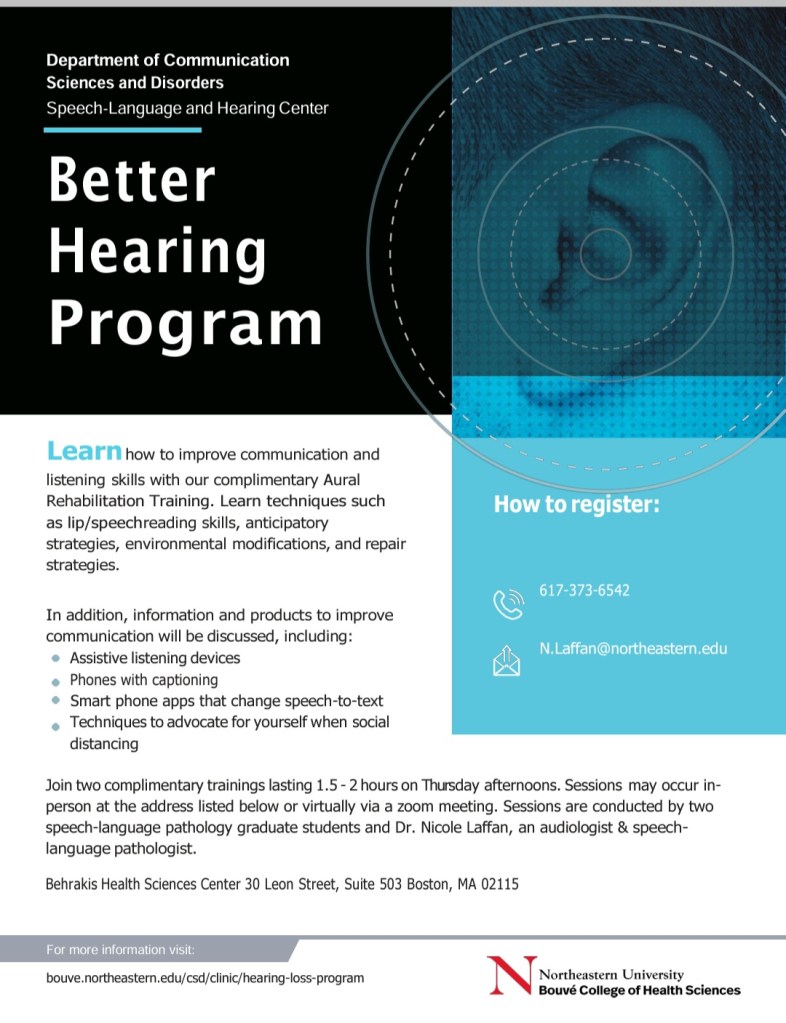
I encourage you to look for this opportunity. Maybe there is a particularly excellent Audiologist or Speech Pathologist in your area who offers Aural Rehabilitation. Below is a flyer for the awesome program I was able to utilize.

 The "Lucky" Brain Tumor
Leave a comment