
One thing that took me somewhat by surprise was the necessity of a fat graft when I had my Acoustic Neuroma brain tumor removed. I felt that it wasn’t something that was well explained.
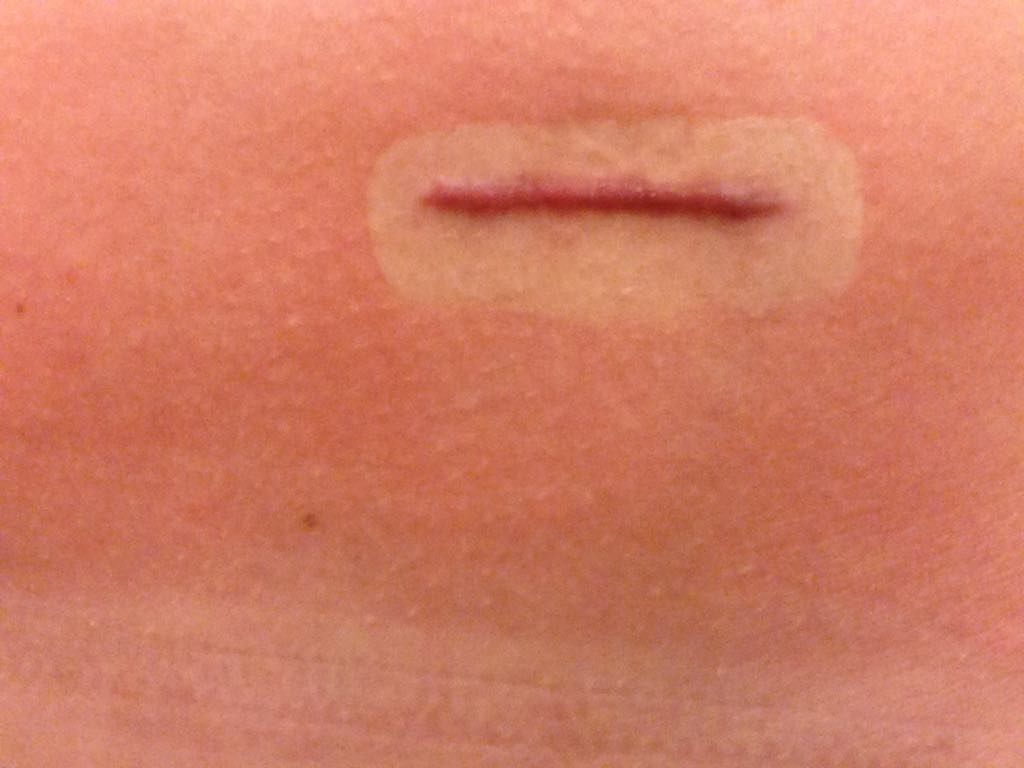
The fat graft is when the surgeon makes a small incision in your abdomen and removes some fat to fill the hole made in your skull to remove the brain tumor. Skull bones will not heal together like a broken arm bone, so the surgeon can not just place the piece of bone back in after removing it. Not all brain surgeries use a fat graft. Some use a titanium plate or a mesh to seal the skull after surgery.
How the surgeons choose to close your incision from your brain surgery depends on the surgical approach used. For the translabyrinthine approach, they always close with a fat graft. I believe it is common also for Middle Fossa, but I have heard more variability for how surgeons choose to close a retrosigmoid approach. It is a topic I would ask about when discussing details of your surgery with your surgeon.
I was not given the opportunity to choose the location of the incision for my fat graft. I have since heard that several folks were given that option. I would definitely ask, as I would love to have had my incision below my bikini line if I had been given the chance.
There is a complication that can arrive from the fat graft incision. I had been told it was very uncommon, but I experienced it, and I have chatted with several folks who had this situation. Sometimes, the fat graft can produce a hematoma. A hematoma is essentially a bruise, a pooling of old blood. When I was in the hospital after my brain surgery, I was given daily injections of heparin in my abdomen to thin my blood to reduce the risk of a post-op blood clot. Since heparin thins the blood, your blood will not clot as well, and I personally feel it may have contributed to my hematoma.
If you have a hematoma, the area around the fat graft can become quite swollen and tender. It can make wearing pants or strapping on a seat belt quite uncomfortable. It does go away on its own, but it can take a long time (weeks or longer). Your body has to reabsorb all that old blood, and that can be a slow process. If you think of how long a bruise can hang around and that a hematoma often has a lot more fluid volume, it makes sense how slow the process of healing can be.
For most folks, the incision for the fat graft is very small and heals smoothly and isn’t extremely visible. I had a challenging time healing and a large hematoma, so my incision is a little more obvious, but not anything concerning. If you have a large hematoma and would like to hear my experience in full, I would be happy to share my story. Just reach out.
I also wondered what the effect of pregnancy would be on my incision scar. What I found was that it stretched just like the rest of my abdominal skin. It still looks pretty similar to how it appeared before my pregnancy. It added no issues or problems.
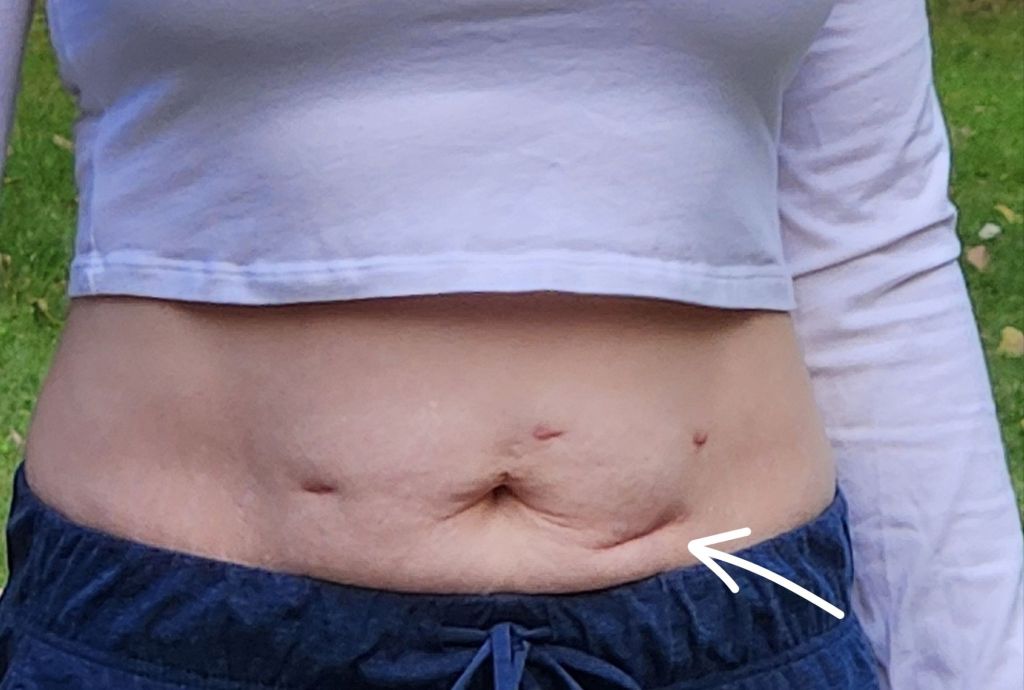
(Ignore my other scars from non related abdominal surgeries).
These days, I do very much enjoy joking that I am literally a fat head now. So at least there’s that. 🤣

 The "Lucky" Brain Tumor
Leave a comment