

“Hearing loss stigma is the negative or unfair beliefs about hearing loss and hearing devices that make people view it as abnormal and undesirable.”
I recently attended the 2025 Hearing Loss Association of America National Convention. I was so incredibly excited to attend for a variety of reasons, not least of which was the research symposium. I am pretty nerdy at heart, and I have been known to enjoy a deep dive into information from time to time. But the reason I was so excited for this in particular was that the topic was near and dear to my heart, hearing loss stigma.
I honestly started this blog in part because of my frustration with the stigma surrounding hearing aids and other hearing assistance devices. I was helping young adults in my support group, and I heard the same thing repeatedly. This refrain was, “I am not happy with my hearing loss and am struggling, but I don’t feel like I can get a hearing aid because I am young and people will judge me.” There were variations on this theme, but many people shared similar feelings. There are already so many barriers to getting a hearing device: finances, insurance, travel, time, etc. It breaks my heart that the cultural stigma is so strong that it precludes people from even attempting to get hearing assistance.
I was recently watching a reel by Dr. Cliff, who has some great audiological content, and he said that hearing aid stigma doesn’t exist anymore. This disheartened me, as it is a reality that a lot of people are struggling with stigma barriers. Many people respect Dr. Cliff and listen to what he shares. If he is dismissive of this issue, I worry others will think this is not a cause we need to work on. https://www.facebook.com/share/r/1EEpXzcmq7/
So, I was extremely excited to attend the Hearing Loss Stigma Research Symposium and see hearing loss stigma being taken seriously. The panel was fantastic, with a wide breadth of knowledge. Dr. Laura Nyblade has a career in researching stigma in culture and has worked for over twenty years on researching stigma for HIV. Dr. Jessica West specializes in hearing loss research and has experienced hearing loss herself from a young age. Dr. Margaret Wallhagen has had a long career in palliative care and gerontology. Lastly, Ibraham Dabo is the commissioner for the Georgia Commission for the Deaf and Hard of Hearing and experienced hearing loss as a young adult. I truly loved how the panel was made of people who had a great wealth of knowledge but also brought perspectives about what hearing loss is like at different times and places in life.
The consensus from the panel is that in order to combat hearing loss stigma, we have to do the research so we have definitions, data, and numbers on how it is impacting people. Without that step, we won’t be able to get anyone to listen or care. Dr. West shared that even in academic circles, her colleagues often struggle to believe this in indeed a real issue. So step one is to get the information and distill it into data.
The panel covered an in-depth discussion on what stigma is and what it looks like when it impacts people with hearing loss. A good example of stigma creating barriers is that, on average, it takes people six years after learning of their hearing loss to pursue a hearing device. One of the topics they touched on that I had pondered for some time is why are hearing aids so stigmatized when glasses have lost the stigma and even become a fashion item? A postulated theory is that hearing loss impacts others more directly because it creates communication breakdowns. I found this an extremely interesting idea.
The panel also addressed the million dollar question: What can we do to combat hearing loss stigma? The answer is to build awareness. People who have experienced the stigma need to describe what has happened and how it has impacted their lives. Folks need to share their hearing loss story, so that others can understand it and it can become more normal. It’s hard to care about a concept. It works so much better to care about a person and their story. Keeping silent gives the stigma space to grow. Stigma is a process that is used to other people- to make someone else not part of your group. Connecting and sharing with people is the way to help them see that someone they perceive as super different from them is actually pretty similar.
Left unchecked, hearing loss stigma can be downright dangerous. People can get bad medical diagnoses and information if it is not understood that hearing is the issue. Kids can be relegated to negative labels like “bad behavior” if hearing loss isn’t factored in. People can lose jobs and relationships because their communication is suffering, and they don’t feel they can access help. Isolation, anxiety, and depression are not unlikely outcomes for untreated hearing loss.
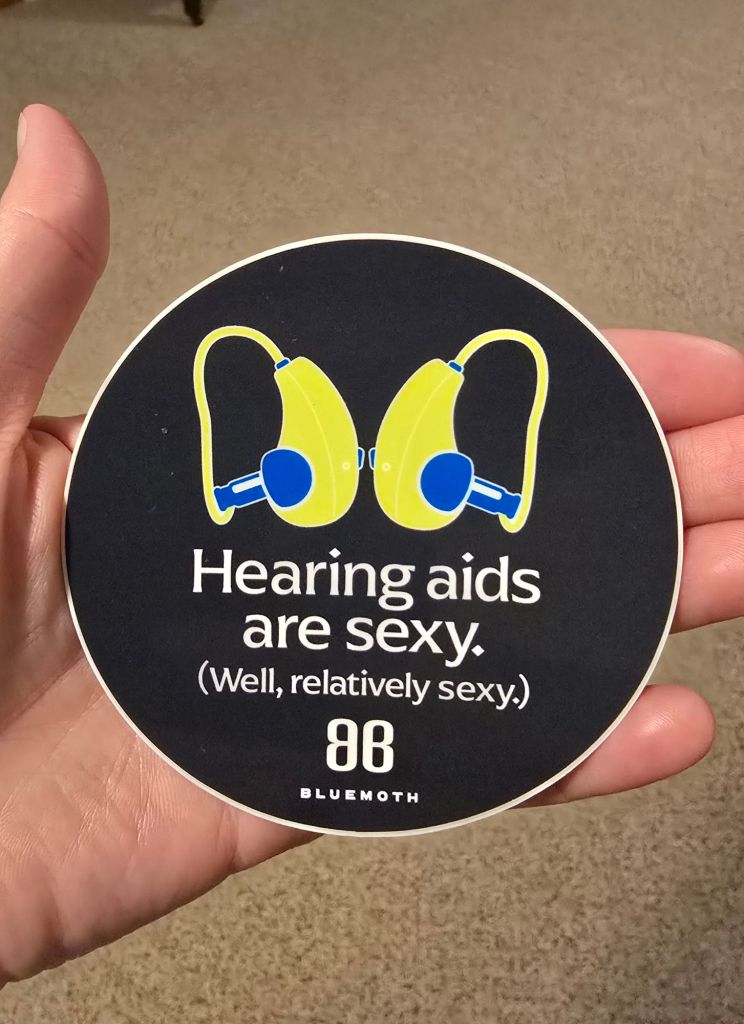
So, perhaps you want to join me in the battle against hearing loss stigma. Maybe you do that by telling your friends all about your hearing devices at brunch. Maybe it’s a sticker on your water bottle that is proud of hearing devices. Maybe you offer to speak in front of a group about your hearing loss experience. Maybe you just wear your hair up at the next family event to show your device. Whatever that looks like for your life and your comfort zone, I hope that you will help connect hearing people to hearing loss so that we can all learn together that there is nothing shameful or wrong in hearing loss or hearing assistance devices.

 The "Lucky" Brain Tumor
Leave a comment