
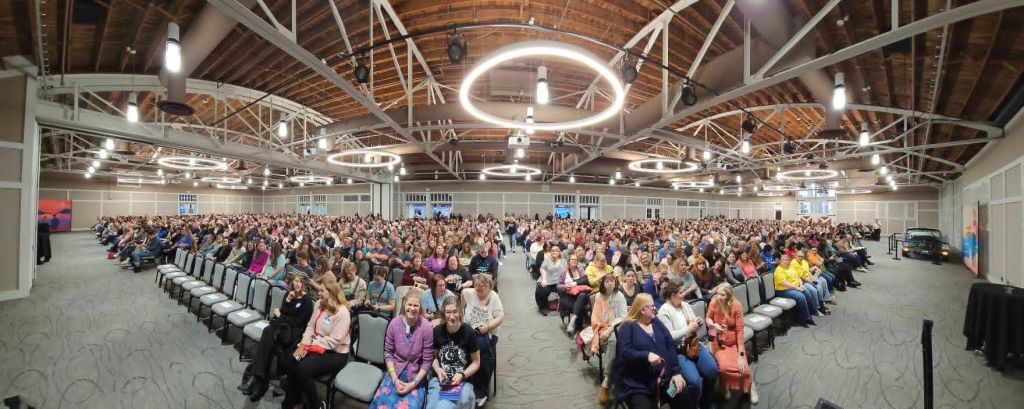
Asking for accommodations can be daunting. Sometimes, just the act of asking for something is hard because of your personality or life experience. But often, I think people don’t ask for accommodations just because they don’t know how or don’t even know the options for possible assistance. I am going to use a recent experience I had to break down asking for accommodations into steps. My hope is that it will make your next experience of asking for an accommodation easier.
My situation was that I wanted to attend a book launch event and author talk. I had never attended an event like this before and was uncertain what to expect.
- Step 1: Research. I went to the event link to see if it had any information about accommodations or accessibility. It did not, but it had a link to the venue (this was an event where the organizers were separate from the venue). I went to the venue page and looked for accessibility and accommodations. I didn’t find any information. I did note the architecture of the space. I saw it was a huge conference room with high ceilings. I knew that I don’t hear well in rooms designed like that. I checked to see if there was mention of a hearing loop and there was not. I found that after I purchased the ticket there were instructions on someone to email if you had accessibility needs. I also learned that the event would have a large attendance- 1,500 people.
- Step 2: Communicating my needs. I emailed the organizer who was listed as the contact for accessibility. I made sure to state my needs and also to list solutions. I know that can be tricky if you haven’t used many accommodations before, but often you can state your need and see what solutions are offered. In general, I find I get the best results when I am specific. I told them I had hearing loss and was concerned about my ability to comprehend the event. I asked if the event would have a hearing loop or captions. I offered that if neither of those were an option then I would probably be ok if I was seated close so I could see the speakers mouths to assist with lipreading.
- Step 3: Selecting the accommodation. The organizer informed me that they would check on if there was a hearing loop but that they would be happy to offer me close seats. They also offered an ASL interpreter. I responded that I don’t know ASL, but that the close seats would be very helpful. (In a perfect world she would have gotten back to me on the hearing loop to connect my bone anchored hearing device to the sound system. She did not so I assumed there was no hearing loop).
- Step 4: Coordinating the accommodation. I arrived at the event unsure how I would find my saved seats. I knew that the general event was first come first served for seating. When I was checking in at the ticket desk I asked how I would find my seats that I had asked for in an accessibility request. I was taken to the person handling accommodations and she let me know my seat was saved with my name on it and to let her know if I had any issues.
- Step 5: Attending the Event. I anticipated that the noise levels in the conference center would be uncomfortable during the milling around time from previous conference experience. I brought along my AirPods Pro 2 and wore them in hearing aid mode so that they reduced the noise level to a more comfortable amount but I could still hear. I also asked my friend attending with me to wear the microphone for my bone anchored hearing device so I could easily understand her and have her words much clearer than the general hubbub. Both of those items made the time spent in lines much more comfortable. I had my whole bag of hearing loss accessories along so I could pivot as needed to make the experience more comfortable and successful.
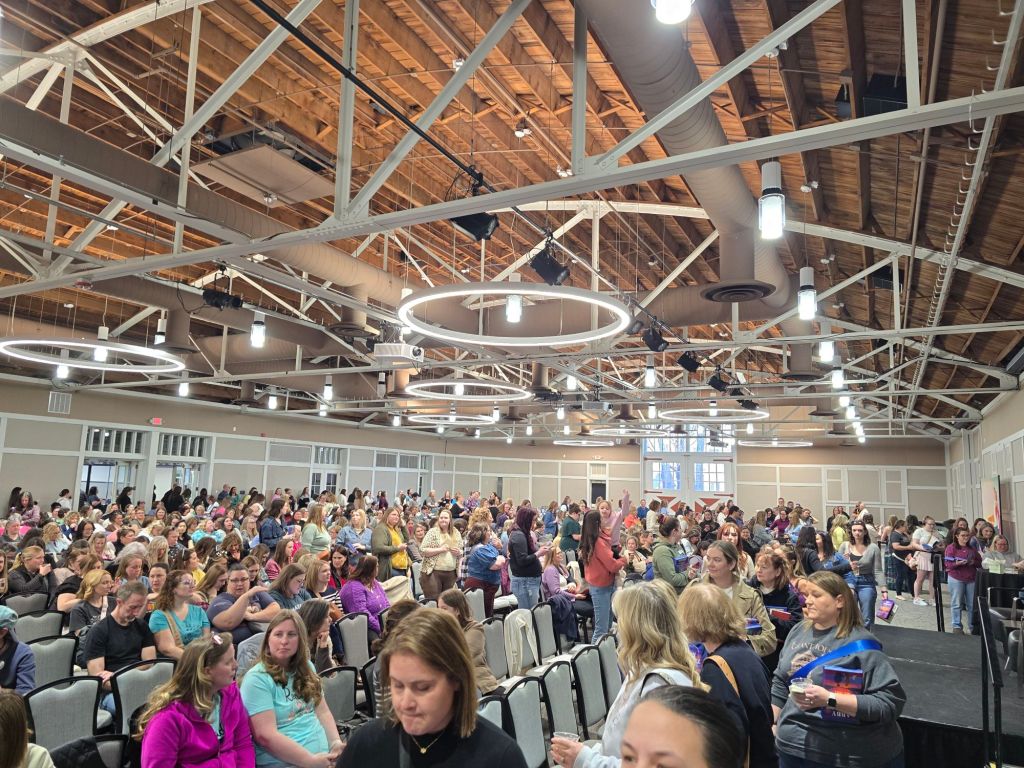
- For the portion of the event where the author spoke, I was seated front and center right before the author. Before the author went on stage, her staff spoke in the microphone and I realized how critical my up front seating was. The sound system was mediocre with quite a bit of distortion so the voice came through with a distinct lack of clarity. I struggled to understand the volunteers as they held the microphone blocking their mouth so I couldn’t lip read. When the author came out, she did a fantastic job of holding the microphone so I could always see her face. I also found her voice to be in a frequency that was easier for me to understand. I did not miss a word of what she said, though her interviewer was more cavalier with her microphone etiquette so I did miss a little of the interviewer’s speech. I was so very grateful I was able to understand and enjoy the event. Those up front seats literally made the experience for me.
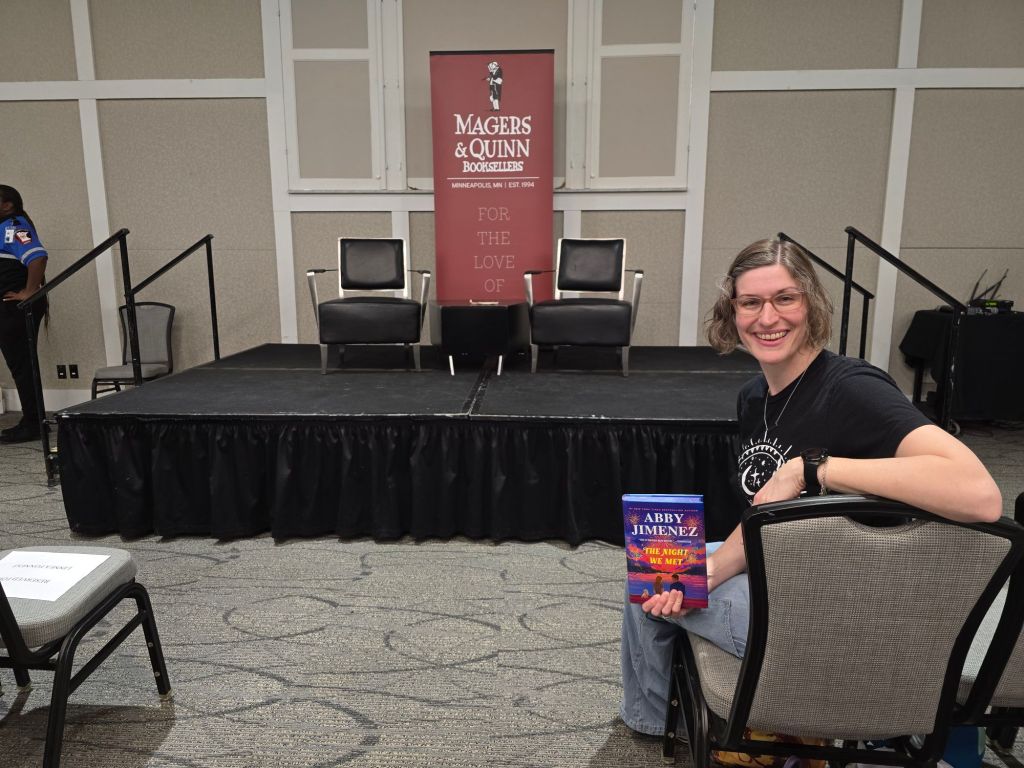
- Step 6: Share gratitude and feedback. After the event, I made sure to find the person who had coordinated my accommodation and thank them profusely for how their assistance made a difference for me. We also discussed how captions would be really helpful but how it was a challenge due to timing and the space’s set up. I find it really helps to let people know that these accommodations do matter and also to give them lived experience for what is needed for the future. Oftentimes folks are doing the best they can but they can do a better job if they better understand how to help.
In the end, I had a great experience where I felt I wasn’t missing out on the communication. I was tired after, but the tools I utilized meant that the listening fatigue was not crushing. I was able to be present and enjoying the event rather than fighting for understanding. I felt I spent the whole event smiling and laughing, not straining.
I hope this may help give you ideas for how you can navigate an event in the future and maybe make asking for accommodations a tad less daunting. I have found that I was my own biggest barrier for getting accommodations. Once I worked through my feelings on asking for assistance, I found that people are typically very happy to do what they can to make an event accessible.

 The "Lucky" Brain Tumor
Leave a comment