
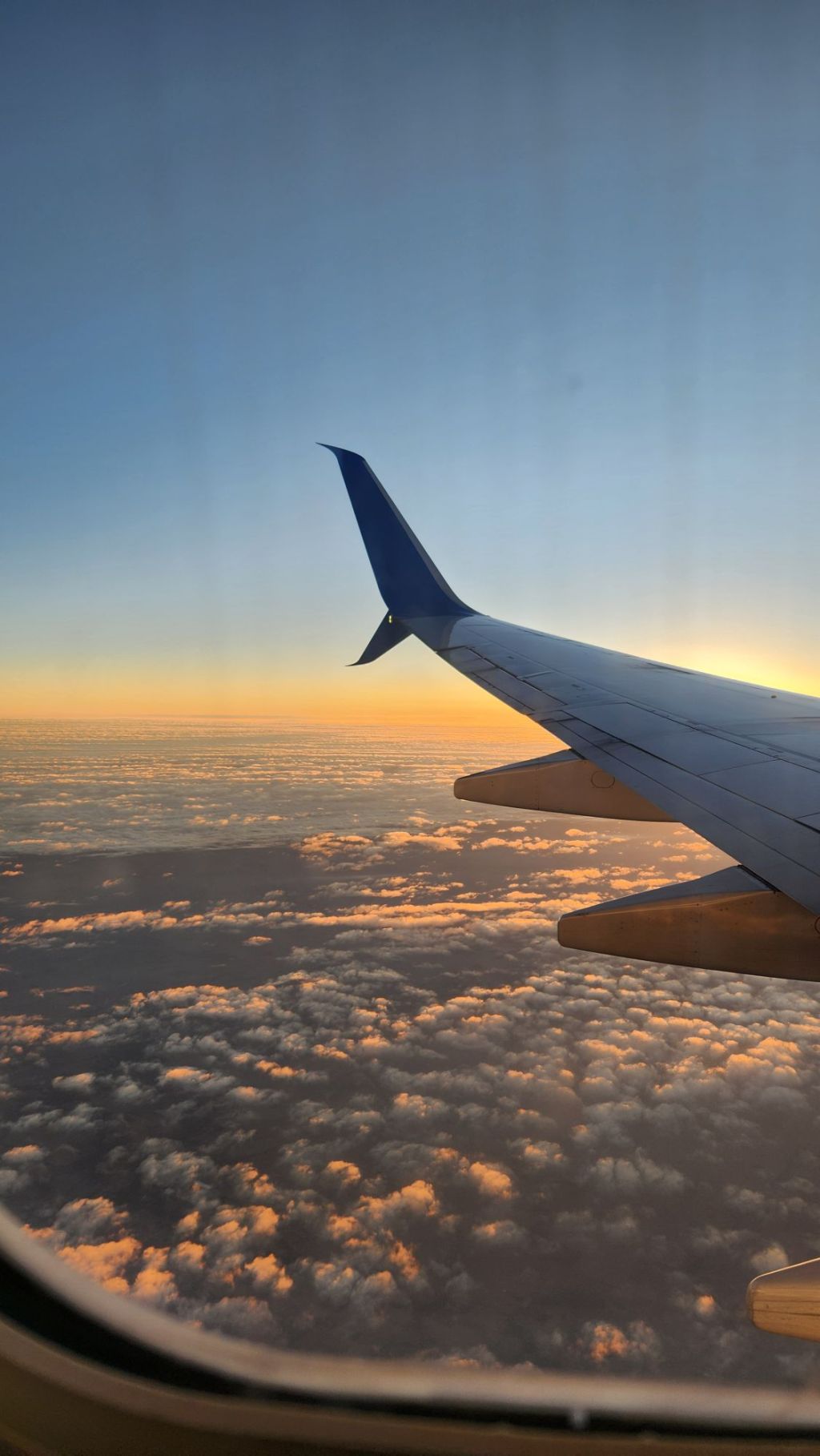
Traveling is exhausting and overwhelming when it goes smoothly and you can hear. Adding in single sided deafness to a travel day and it can really be a lot. With some preparations and tricks, it can be very doable. However, the fatigue from a day of travel is very real.
I have flown both with folks and on my own since my hearing loss. In both situations, I have found it extremely helpful to wear a name tag that says “hard of hearing.” Especially in situations like going through security, having the hearing loss obviously proclaimed has made things less stressful and awkward. One time, tsa didn’t even attempt to talk to me – just gestured. It was great. I forgot my name tag on a recent flight and very much regretted that as I had awkward attempts to turn my head to hear while also trying to comply with instructions for the x-ray machine. I have found a large disposable name tag works best for my hard or hearing tag because it is so visible, a cute little pin just doesn’t get seen.
If you have someone flying with you, I recommend having them be the person interacting with folks behind counters and plexiglass. If you are alone, preface the conversation with letting them know you are hard of hearing. Often, that heads up will help them speak up and look at you, and those two things can help a ton.
I also recently learned that many airports have telecoil systems. If you have a hearing aid of any type, you should be able to connect to the telecoil system and then hear announcements right into your aid. If this isn’t an option, I really recommend sitting so you can see and read the screens at your gate (assuming you could find a seat at a gate, which I could not during my recent travels).
Plan extra time so you have space if something doesn’t go smoothly or you may end up needing extra interactions – especially security. Being rushed or flustered seems to always exacerbate my inability to hear what is going on.
Sometimes, after an Acoustic Neuroma diagnosis, folks worry that flying will create pressure headaches or lead to imbalance. I have never had any extra discomfort of any type on a flight because of my brain tumor diagnosis, and most AN warriors I have spoken with agree. However, if you do have pressure issues, I have been informed that wearing ear plugs for the entirety of the flight can help. Planes are loud, so ear plugs are a good idea just for noise levels.
There is a lot of noise and stimulation in general when you fly. Plan into your travel itinerary that you will be fatigued after a day of travel. If you are traveling with others, ask them to help where you need it. Perhaps bring noise canceling headphones for the flight so you can catch a hearing break. Do what you can to take breaks and not make the day too large.
Here are some other great resources on traveling with hearing loss:
https://www.healthyhearing.com/report/52663-Air-travel-tips-hearing-loss

 The "Lucky" Brain Tumor
Leave a comment