I have had many people apologize before asking me what happens with your hair when you have brain surgery. Folks seem to feel that it is silly to worry about appearance in such a high stakes situation like brain surgery. While I understand why people feel that way, and I wouldn’t recommend picking a brain surgeon based on their hair styling skills, feeling that you look like yourself is really important. There are a ton of challenges after brain surgery, and worrying your appearance isn’t “you” just makes everything harder. So, I wanted to touch on hair and brain surgery.
First of all, don’t preemptively shave your head before surgery. At least, not right before surgery. The doctors prefer that you aren’t shaving close to surgery time as it is easy to have small knicks and cuts in the skin that allow infection in. If you really want a shaved head, I would do it a little in advance of the surgery, not right before.
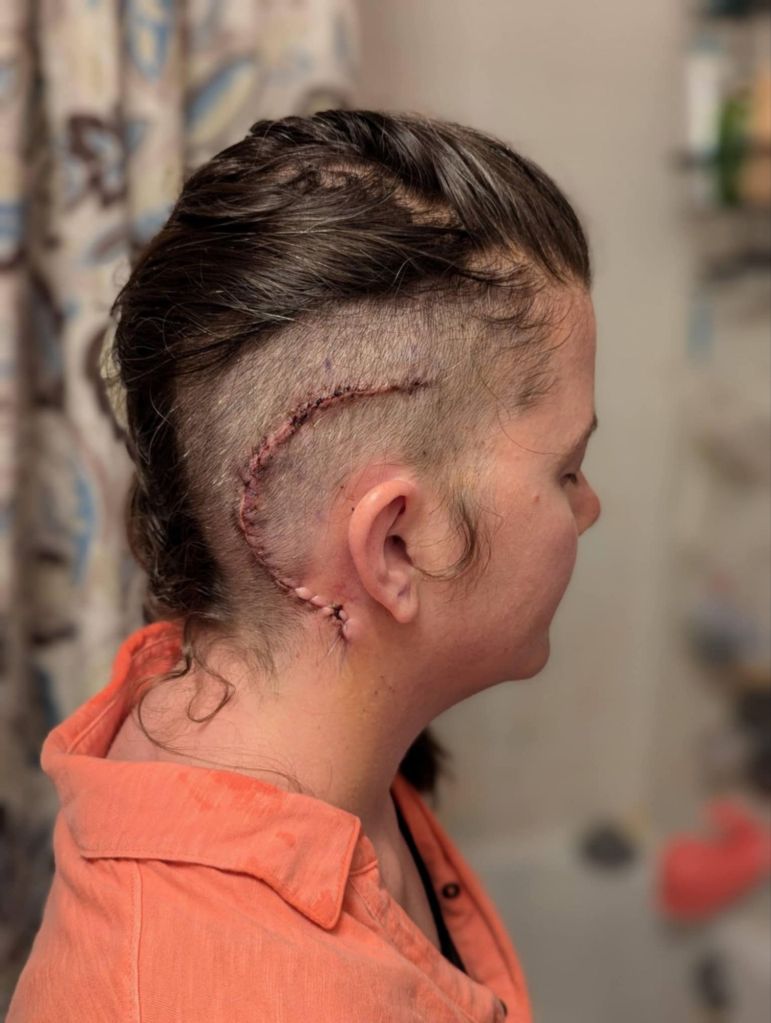
You don’t need to shave your head unless you actually want to or like the look. Depending on the surgical approach, sometimes the doctors just shave a tiny strip right where the incision will be. I don’t have super long hair, and even the nurses in the hospital had to hunt to find the incision. Sometimes, complications arise, and more hair would need to be shaved. I would ask your team what they typically do if this is an important topic for you. I also think if more is shaved, it is easier to get a haircut/ style after surgery to shape things around it than to guess in advance how things will turn out.
I personally went into surgery with my normal hair style and kept that going forward. I have kind of between a bob and a pixie cut depending on the day and thinner hair. I know for folks with longer/ denser hair they found it beneficial to keep it braided away from the incision for ease of care and healing. I did feel like I was picking glue off of my scalp for weeks after. Also, for some time following the surgery, I was only using baby shampoo. I have sensitive skin in general, and I found that after all my surgeries, my skin now really does best with more gentle products. I tend to lean into things like Dove products and stay away from harsher shampoos like Head & Shoulders.
I did also find an uptick in graying hair post brain surgery. I know that stress on your body can increase gray hair, and it made sense to me that brain surgery was enough stress to create a noticeable change. It wasn’t like I became totally gray, but in my late 20s I was seeing some gray streaks in the underside of my hair.
I realize that for people who like a very close haircut, the incision will be more visible. However, with the incision for Acoustic Neuroma surgery often being right behind the ear, even just marginal hair length can make the incision significantly less noticeable. The surgical approach plays a role in the visibility and shape of the scar. It seems translab is the most discrete scar, and middle fossa and retrosigmoid are a little less hidden behind the ear. In general, there appears to be a lot of variety in how the surgeons place the incision, probably specific to the doctor and the case.
It is so important to feel like you haven’t lost your identity in your brain tumor journey. There is definitely a lot of adapting and flexibility needed on a day to day basis. It’s nice if your hair can feel like you and not be another source of disconnect when you look in the mirror. Typically, healthcare professionals seem to understand that. But I would recommend discussing it with them in advance if this is a topic that feels important to you.
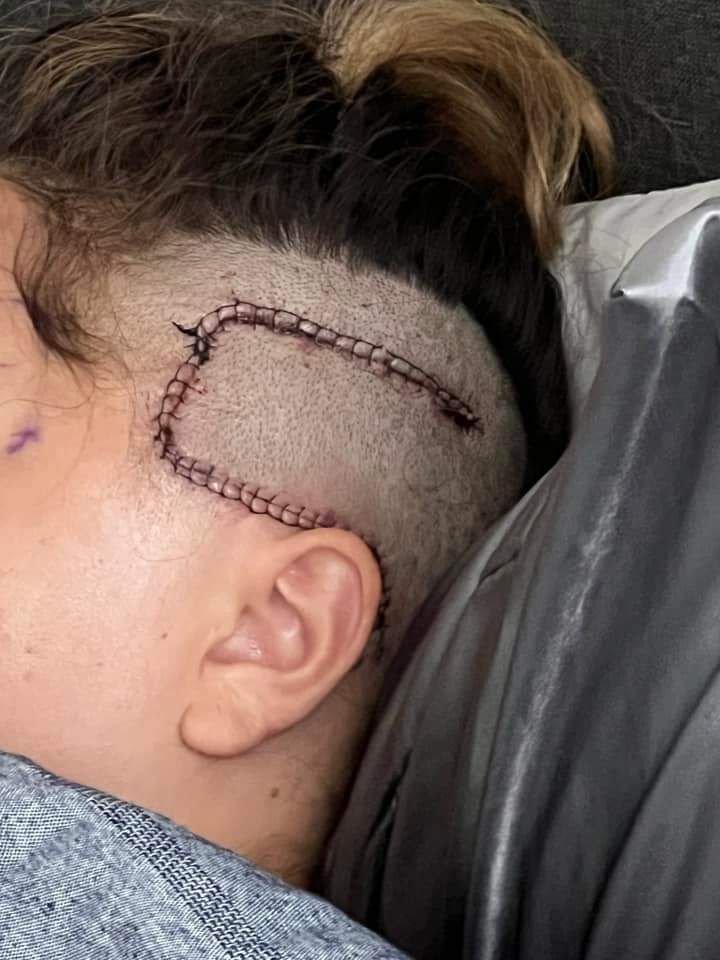
Below are a variety of pictures of incisions that show placement and how much hair was shaved. As you can see, there is a lot of variety.
Thank you to everyone who volunteered a picture!
Middle Fossa Approach

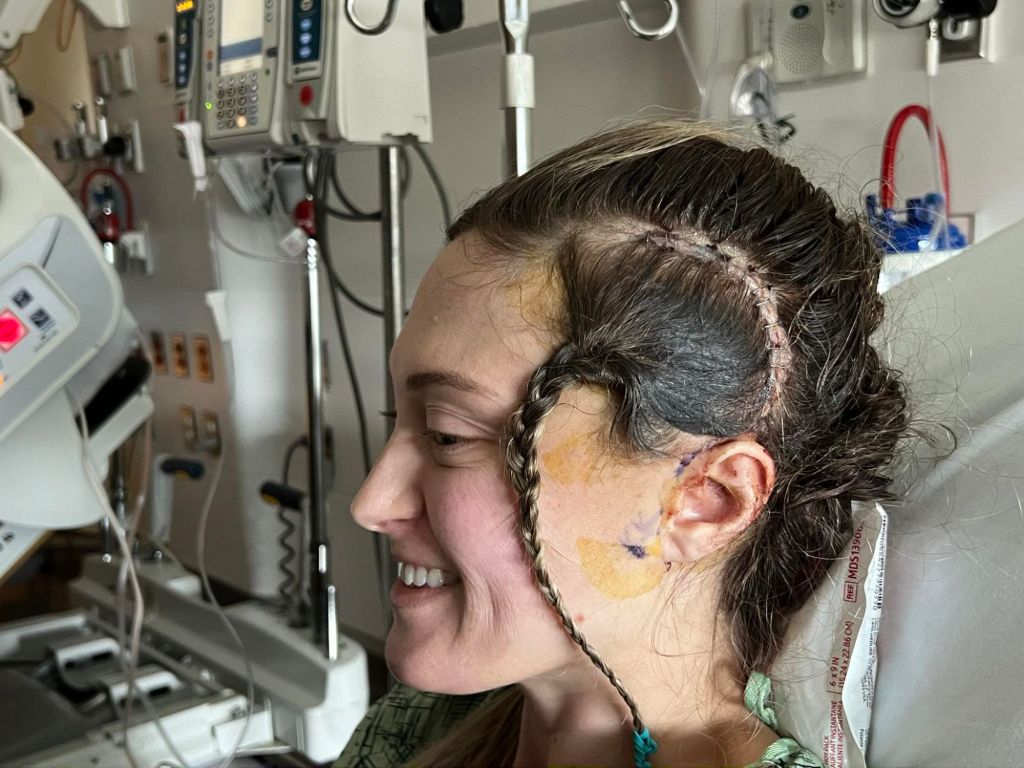

Translabyrinthine Approach

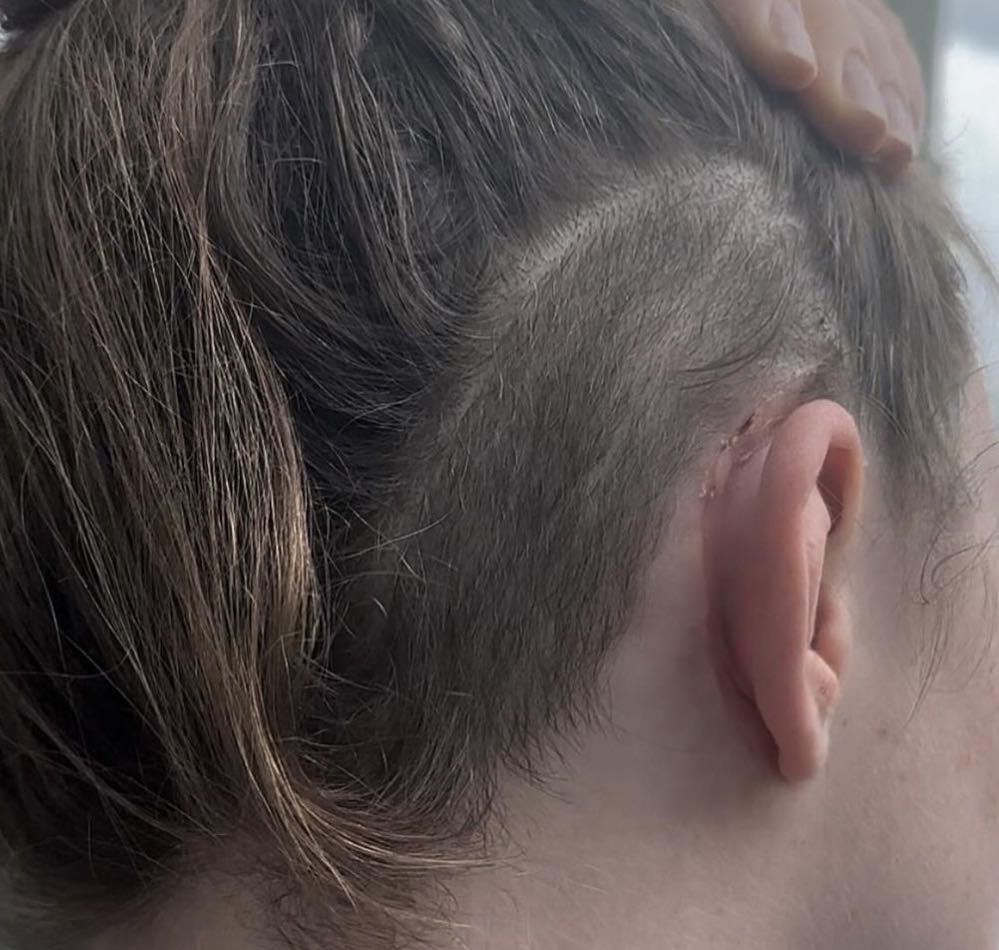


Retrosigmoid Approach



 The "Lucky" Brain Tumor
Leave a reply to Emily Cancel reply