
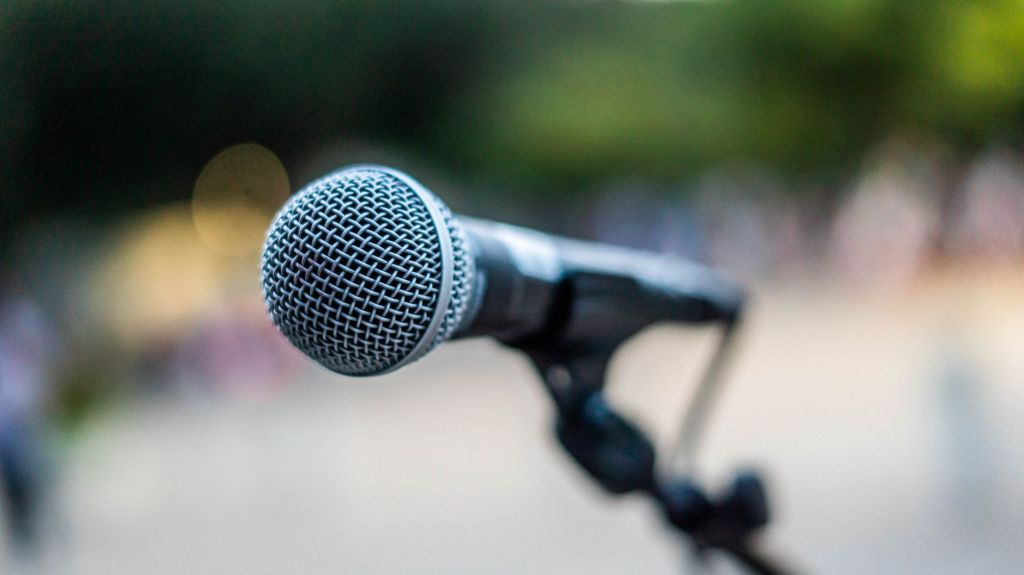
The other day I attended an event at my child’s school where they were presenting a bunch of information to parents. The speaker started the event by speaking normally, the microphone laying on the stand beside her, asking if we could hear her or if she had to use the microphone. For the first several years I had hearing loss, in that situation I would have kept my mouth shut and hoped someone else would speak up and ask she use the microphone. I have spent the last several years practicing my self advocacy, so this time when this occurred I immediately spoke up and asked that the microphone be used. She then proceeded to speak in the microphone and I immediately noticed a significant reduction in how hard I had to focus to understand the content.
What I wish is that I never had to speak up in the first place. We have audio and visual systems in place for a purpose. Even for someone with normal hearing it can be really challenging to understand what is said in those large auditorium spaces that have terrible acoustics. When someone doesn’t utilize the technology provided but instead asks the audience, I feel like I am being singled out for my disability. I know it isn’t intended in that manner, but nonetheless I feel called on the carpet.
I have attended presentations before where the speaker has spent significant time describing their personal disgust and discomfort with microphones and then proceeded to ask if everyone can hear. I loathe that sort of moment, because I can’t hear but the long set up has made it feel 100% uncomfortable for me to speak up. Or other times speakers like to proudly proclaim that they are so good at projecting they never need a microphone. It’s not always about the person’s voice, sometimes it is about the way sound travels throughout the space they are presenting in. Also, you never know the hearing ability of the audience. The presenter’s lack of awareness makes me wildly uncomfortable expressing my needs, especially in front of a group.
I know that not everyone is comfortable doing public speaking. I also realize that not everyone is trained on microphone use and etiquette. However, I frequently encounter this roadblock with people who have prepared presentations. I truly don’t think it is too much to ask that while they prepare their slides they also prepare to use a microphone to help keep the meeting as accessible as possible. I also think that including training on microphones more widely would be a great idea. Let’s have kids practice presenting with a microphone when they are learning to present to their classes.
As someone with hearing loss, I expend a ton of energy to successfully communicate. I am constantly working hard to gather all the information. I also have to do daily self advocacy- I ask someone to repeat themselves, I ask someone to face me, I ask to move to a different seat at the table, I ask for quiet, etc. I know this may seem like a really small thing but it is just one more ask and self advocacy moment that I truly don’t need. I recognize that likely my seat mates aren’t judging me for asking the presenter to use the microphone, but that doesn’t really change my discomfort with speaking up and asking. The whole point of a presentation is to successfully communicate information. It boggles my mind that these presenters are not actively removing every barrier possible to make sure the information gets to those that need it.


 The "Lucky" Brain Tumor
Leave a comment