
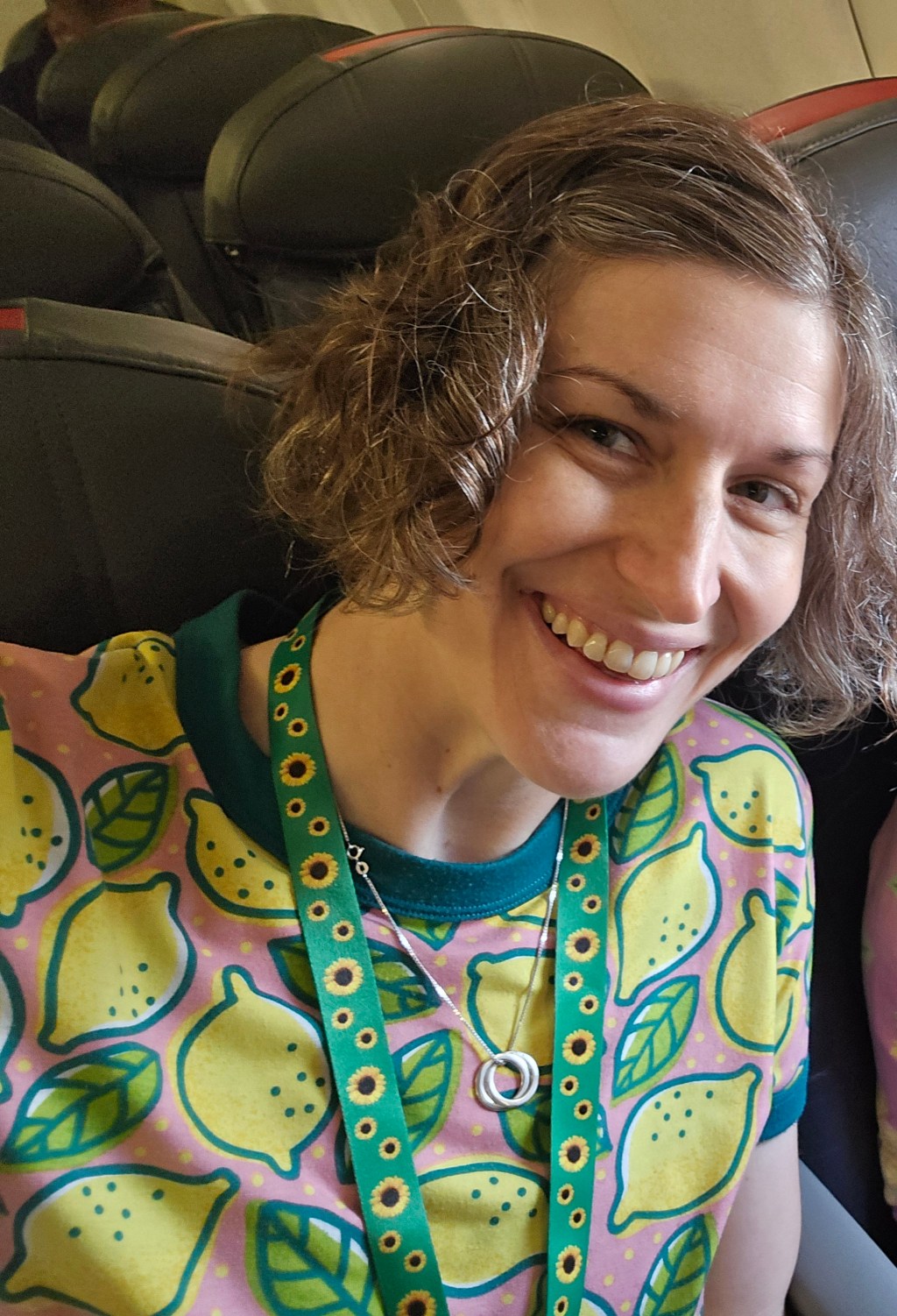
I recently had my first opportunity to try out flying with a sunflower lanyard. A sunflower lanyard tells people that you have a hidden disability and may need assistance or accommodation. Many businesses participate in this program, but it is especially commonly utilized in transportation businesses like airports. I learned about it during my last flight https://luckybraintumor.com/2025/03/11/making-hidden-disabilities-visible-sunflower-lanyard/, and was excited to give it a try this trip. Both airports I was traveling through participate in the sunflower program. You can find a list of participating businesses here: https://hdsunflower.com. The lanyards can be purchased off of Amazon or often the airports give them out for free.
Previously, when I flew I wore a hand written hard of hearing name tag and I found a lot of success with that method. I share some of those stories here: https://luckybraintumor.com/2024/02/21/flying-with-single-sided-deafness/. I was very curious to see how the sunflower lanyard experience would compare with the hard or hearing name tag, so I purposely did not wear that name tag this time.
I found that going through security I wished I had the hard of hearing name tag. I did not feel like TSA did any accommodations for me based on my sunflower lanyard. I struggle with talking through the plexiglass at the id and boarding pass kiosk. I also seem to always have the security personnel on my deaf side when I am going through the metal detector so I can’t hear their instructions. When I have previously worn my hard of hearing sticker, often TSA agents don’t even try to talk to me but only gesture. I love when they do this. I felt I had to struggle through security without extra help from the staff (my family was along and helped me navigate these moments).
I did, however, feel like the sunflower lanyard was very helpful with the airline staff members. I had preboarding on my ticket, which I have utilized for hearing loss and I also have another disability that benefits from preboarding. On both my flights I never heard them call preboarding so I walked up when boarding started and asked if they were doing preboarding. Both times the staff member started to turn me away, saw my lanyard, and said that I could board without even checking my ticket said preboarding. I really appreciated that the sunflower lanyard smoothed the conversation and made it easy for me to get accommodation. One of the staff even referenced the lanyard when telling me I could board.
I know that at times people worry that advertising that you have a disability could be risky. I would never want to tell someone how to feel, and I can see some possible risks, but for me sharing my disability has never made me feel unsafe. It has typically meant that people give me extra grace and are more understanding. As a young person with hearing loss I have frequently felt like I was being judged and misunderstood as a rude millennial rather than someone who struggled to hear. There are many safety precautions I take- such as not tuning out the world by putting an ear bud into my hearing ear in a location where I feel I need to be vigilant for my safety- but I feel fine wearing a lanyard that shares I have a disability while traveling.
Having tried it out, I will definitely use the sunflower lanyard again when I fly. I will especially use it when traveling in places that participate in the program and don’t have English as a primary language. I will probably also wear a hard of hearing name tag as that has previously served me well. I suspect the combo of wearing both will give me the most support and the smoothest airport experience possible. I love how visual communication systems like these can lower stress, create more understanding, and fast track solutions. Part of what makes travel days so exhausting with a disability is being hypervigilant that someone is trying to communicate. I feel like I can let my guard down a little when I wear signage indicating there may be communication difficulties.


Leave a Reply